
12 Timeless Watches for Men
There’s something deeply personal about choosing a watch. More than just telling time, the right timepiece becomes an extension of your identity—a subtle statement about your values, your appreciation for craftsmanship, and your understanding of heritage. Whether you’re just starting your collection or looking to add another significant piece, navigating the world of luxury watches can be overwhelming. With countless options available, how do you identify which watches truly stand the test of time?
This comprehensive guide focuses on the 12 most iconic men’s watches that have transcended trends and remained relevant across generations. These aren’t just accessories—they’re heirlooms, conversation starters, and investments that often appreciate in value. I’ve spent years collecting and studying these masterpieces, and I’m excited to share what makes each one special, from their historical significance to their cultural impact. Also, check out the Best Affordable Swiss Watches & Brands

1. Rolex Submariner (1953)
The Rolex Submariner isn’t just a watch; it’s the blueprint that defined what a modern dive watch should be. Introduced in 1953, it was one of the first timepieces specifically engineered for underwater exploration, featuring a rotating bezel to track diving time and exceptional water resistance that was revolutionary for its era.
What makes the Submariner truly special is its versatility. It seamlessly transitions from ocean depths to formal events, which explains why it’s graced the wrists of everyone from James Bond (Sean Connery wore it in early 007 films) to Steve McQueen. Its design language has remained remarkably consistent through the decades—the luminous hour markers, Mercedes hands, and cyclops date window have become signature elements that countless other watches have attempted to emulate but never quite matched. For many collectors, the Submariner represents the perfect first serious watch purchase, offering timeless appeal and impressive resilience against depreciation.
2. Omega Speedmaster (1957)
Few watches can claim to have been to the moon and back, but the Omega Speedmaster has literally made history. Initially designed as a racing chronograph in 1957, the “Speedy” gained eternal fame when it became the first watch worn on the lunar surface during the Apollo 11 mission in 1969. Before being selected by NASA, it underwent some of the most rigorous testing ever conducted on a timepiece, cementing its reputation for exceptional reliability.
The Speedmaster’s enduring black dial with its triple-register chronograph layout represents functional elegance at its finest. Its manual-winding movement connects the wearer to horology traditions that predate modern conveniences. Buzz Aldrin, Neil Armstrong, and generations of astronauts have depended on this watch, but its appeal extends far beyond space enthusiasts. The Speedmaster tells a story of human achievement and precision engineering that resonates with anyone who appreciates the combination of historical significance and understated sophistication. The “Moonwatch” designation isn’t just marketing—it’s a badge of honor earned through one of horology’s greatest adventures.
3. Patek Philippe Nautilus (1976)
When legendary designer Gérald Genta sketched the Nautilus design on a napkin during the Basel Watch Fair, he couldn’t have anticipated creating one of the most coveted timepieces in modern horology. Introduced in 1976, the Nautilus broke all conventional luxury watch rules with its distinctive porthole-shaped case and integrated bracelet, challenging the notion that luxury watches must be round and made of precious metals.
The Nautilus represented Patek Philippe’s bold entry into the luxury sports watch category, featuring an elegantly simple dial with horizontal embossing and a case that combined sportiness with sophistication. Its cultural cachet has reached astronomical levels, with waiting lists stretching years and secondary market prices often doubling or tripling retail. The watch has adorned the wrists of numerous celebrities including Brad Pitt, Ellen DeGeneres, and Jay-Z, but its real appeal lies in its perfect balance of casual elegance and mechanical excellence. The phrase from Patek’s famous advertising campaign rings especially true for the Nautilus: “You never actually own a Patek Philippe. You merely look after it for the next generation.”
4. Rolex Datejust (1945)
The Datejust holds the distinction of being the first self-winding waterproof chronometer wristwatch to display the date in a window at 3 o’clock—an innovation that seems commonplace today but was revolutionary in 1945. Released to celebrate Rolex’s 40th anniversary, the Datejust became the archetypal dress watch that could also handle daily wear.
What makes the Datejust special is its chameleon-like adaptability. Available in countless combinations of metals, dial colors, bezel styles, and bracelet options, it can be personalized to suit any taste while remaining instantly recognizable. The fluted bezel and Jubilee bracelet have become signature elements that exude quiet luxury. Presidents, business leaders, and cultural icons including Winston Churchill, Martin Luther King Jr., and Paul Newman have chosen the Datejust as their daily companion. It represents horological conservatism in the best possible way—not flashy or trendy, but dependably elegant across generations. For many families, the Datejust is the heirloom piece passed down to mark significant life milestones.
5. Audemars Piguet Royal Oak (1972)
The Royal Oak’s origin story reads like a high-stakes gamble that paid off spectacularly. When Audemars Piguet debuted this stainless steel watch with a price tag comparable to gold timepieces, the industry was skeptical. Designed by Gérald Genta (the same genius behind the Nautilus), the Royal Oak featured an octagonal bezel secured by visible screws and an integrated bracelet that revolutionized watch design aesthetics.
What began as a controversial release has evolved into perhaps the most influential luxury sports watch ever created. Its distinctive “tapisserie” dial pattern, with its small waffle texture, provides depth and character that changes appearance under different lighting conditions. The Royal Oak has been worn by cultural tastemakers ranging from Karl Lagerfeld to LeBron James and Arnold Schwarzenegger. Its industrial chic look—inspired by traditional diving helmets—created an entirely new category of luxury watches that were both sporty and sophisticated. For collectors, the Royal Oak represents horological rebellion that succeeded against all odds, transforming both Audemars Piguet as a company and the entire watch industry’s approach to design and materials.
6. Jaeger-LeCoultre Reverso (1931)
Few watches can claim to have a case that literally flips over, but that’s exactly what makes the Reverso special. Created in 1931 for British army officers playing polo in India, the Reverso featured an ingenious swiveling case that could be turned inward to protect the delicate crystal from mallet strikes. This functional innovation has evolved into one of horology’s most distinctive design signatures.
The Reverso’s Art Deco aesthetics—rectangular case, triple grooves, and clean dial—represent the perfect marriage between form and function. The flippable case offers unique possibilities, from protecting the watch face during activities to showcasing personalized engravings, different complications, or even a second timezone on the reverse side. Notable wearers have included Amelia Earhart, King Edward VIII, and more recently, Benedict Cumberbatch. The Reverso demonstrates how a practical solution can transform into an enduring design classic. While most iconic watches are round, the Reverso’s rectangular elegance offers a refreshing alternative that has maintained its appeal for nearly a century, proving that true innovation never goes out of style.
7. Rolex Daytona (1963)
The Cosmograph Daytona has perhaps the most dramatic story arc of any watch on this list. Initially unpopular upon its 1963 release, it languished in display cases until Paul Newman was photographed wearing his. Today, vintage Daytonas command some of the highest prices at auction, with Newman’s personal model selling for a record-breaking $17.75 million in 2017.
What makes the Daytona special is its perfect execution of the chronograph function within a supremely wearable package. The tachymeter scale on the bezel, which allows the wearer to measure average speed over a known distance, connects the watch to its motorsport heritage. The balanced dial with three subdials has become instantly recognizable to watch enthusiasts worldwide. Beyond Newman, the Daytona has adorned the wrists of racing legends like Sir Jackie Stewart and contemporary icons including John Mayer and Ellen DeGeneres. Its transformation from overlooked model to auction darling exemplifies how cultural associations can dramatically alter a timepiece’s trajectory. For collectors, the Daytona represents the perfect intersection of sporting functionality, visual balance, and cultural significance.
8. Breitling Navitimer (1952)
When pilots needed a wrist-worn navigation computer in the early jet age, Breitling answered with the Navitimer. Introduced in 1952, this chronograph featured a slide rule bezel that could perform crucial calculations for airspeed, fuel consumption, distance, and conversion metrics—essentially putting a mechanical flight computer on the wrist before digital tools existed.
The Navitimer’s busy dial might seem complex to novices, but for aviation enthusiasts and professionals, it represents functional art at its finest. The circular slide rule, chronograph pushers, and distinctive “beaded” bezel create an unmistakable profile that has remained remarkably consistent for over 70 years. It became the official watch of the Aircraft Owners and Pilots Association (AOPA) and has been worn by celebrities including John Travolta (a qualified pilot himself), Graham Hill, and Miles Davis. What sets the Navitimer apart is how it embraces its complexity rather than hiding it—the intricate dial calculations and markings are proudly displayed as badges of its professional-grade capabilities. For collectors, it represents a time when mechanical watches weren’t just timekeepers but essential tools for professionals who literally navigated the world.
9. Cartier Tank (1917)
Inspired by the aerial view of Renault tanks used during World War I, Louis Cartier created a watch that transformed utilitarian inspiration into pure elegance. The Tank’s rectangular case with clean lines and Roman numerals established a design language that has influenced rectangular watches for over a century.
What makes the Tank extraordinary is how it transcends gender, occasion, and era. It has adorned the wrists of cultural icons across all fields—from Andy Warhol, who famously never wound his, to Princess Diana, Jacqueline Kennedy Onassis, and Muhammad Ali. The Tank’s design balances masculine strength with refined proportions, making it equally appropriate with formal attire or casual wear. Its distinctive blue cabochon crown and sword-shaped hands have become Cartier signatures. Unlike most watches on this list which emphasize their technical specifications, the Tank’s appeal lies primarily in its perfect proportions and cultural significance. For many collectors, owning a Tank isn’t about having the most complicated or expensive timepiece—it’s about possessing a piece of design history that has influenced fashion, art, and culture far beyond the world of horology.
10. IWC Portugieser (1939)
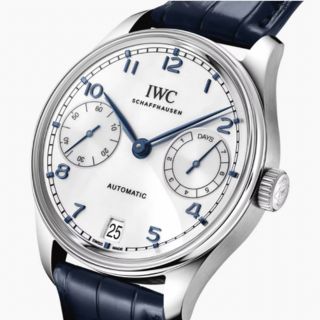
Originally commissioned by Portuguese merchants who wanted a wristwatch with pocket watch precision, the IWC Portugieser broke convention with its unusually large case size for the era. What was considered oversized in 1939 has become the standard today, making the Portugieser a watch that was decades ahead of its time.
The Portugieser’s clean dial design with railway-track minute scale, Arabic numerals, and leaf-shaped hands creates a perfect balance between legibility and elegance. Its in-house movements often feature impressive power reserves and complications displayed with tasteful restraint. Notable wearers include Kevin Spacey, Bradley Cooper, and Ewan McGregor. What distinguishes the Portugieser is how it bridges the gap between dress and sports watches—formal enough for business settings yet casual enough for weekend wear. For collectors, it represents sophisticated understatement and technical excellence without ostentation. The Portugieser proves that true innovation can involve anticipating trends decades before they materialize, as its once-unusual size has become the new standard for modern luxury timepieces.
11. Lange & Söhne Lange 1 (1994)
The Lange 1 represents one of horology’s greatest comeback stories. After A. Lange & Söhne was nationalized following World War II and effectively disappeared during East German communist rule, the company was revived after German reunification. The Lange 1, introduced in 1994, immediately established the reborn brand as one of the world’s premier watchmakers with its distinctive asymmetrical dial layout and impeccable German craftsmanship.
What makes the Lange 1 extraordinary is its perfect asymmetry—the off-center hour/minute dial, small seconds subdial, power reserve indicator, and oversized date window create a visual harmony that shouldn’t work but absolutely does. Looking at the movement through the sapphire caseback reveals hand-decorated plates and bridges in German silver, with hand-engraved balance cocks that are individually unique to each watch. Notable collectors include Ed Sheeran, Michael Jordan, and numerous heads of state. The Lange 1 exemplifies German perfectionism, with twice-assembled movements (first to ensure function, then disassembled, decorated, and reassembled for delivery) and microscopic attention to details that most owners will never see but appreciate knowing exist. For serious collectors, it represents watchmaking at its most uncompromising, created not to meet a price point but to achieve perfection.
12. Vacheron Constantin Overseas (1996)

While relatively young compared to others on this list, the Vacheron Constantin Overseas has quickly established itself as a modern icon. Drawing inspiration from the brand’s earlier 222 model, the Overseas was designed to compete in the luxury sports watch category pioneered by the Royal Oak and Nautilus, but with Vacheron Constantin’s distinctive aesthetic approach and unmatched finishing.
What distinguishes the Overseas is its subtle sophistication and ingenious practical features. The distinctive notched bezel inspired by Vacheron’s Maltese cross logo creates an immediately recognizable profile, while the quick-change strap system allows owners to transform the watch’s character in seconds without tools. Inside beats some of the industry’s most beautifully finished movements, certified with the prestigious Geneva Seal. Notable wearers include Ryan Reynolds, Chris Hemsworth, and various Fortune 500 CEOs who appreciate understated luxury. The Overseas represents accessible exclusivity—more obtainable than some watches on this list but still produced in limited quantities that ensure its rarity. For collectors, it offers an entryway into one of horology’s “Holy Trinity” manufacturers with a versatile design that can be the only watch you need while still satisfying the most discerning connoisseur’s standards for craftsmanship.
These twelve timepieces represent more than just ways to tell time—they are cultural touchstones, engineering achievements, and artistic expressions that have earned their place in horological history. Whether you’re drawn to the adventurous spirit of the Submariner, the celestial connections of the Speedmaster, or the perfect proportions of the Tank, each watch offers a unique connection to tradition while remaining thoroughly relevant today.
The beauty of building a watch collection is that it’s deeply personal. Some collectors focus on a single brand, while others curate diverse pieces that serve different purposes. Whatever your approach, these twelve icons provide a foundation of understanding for what makes a truly timeless watch—one that transcends fashion to become something much more meaningful: a companion for life’s journey and perhaps an heirloom for generations to come.


